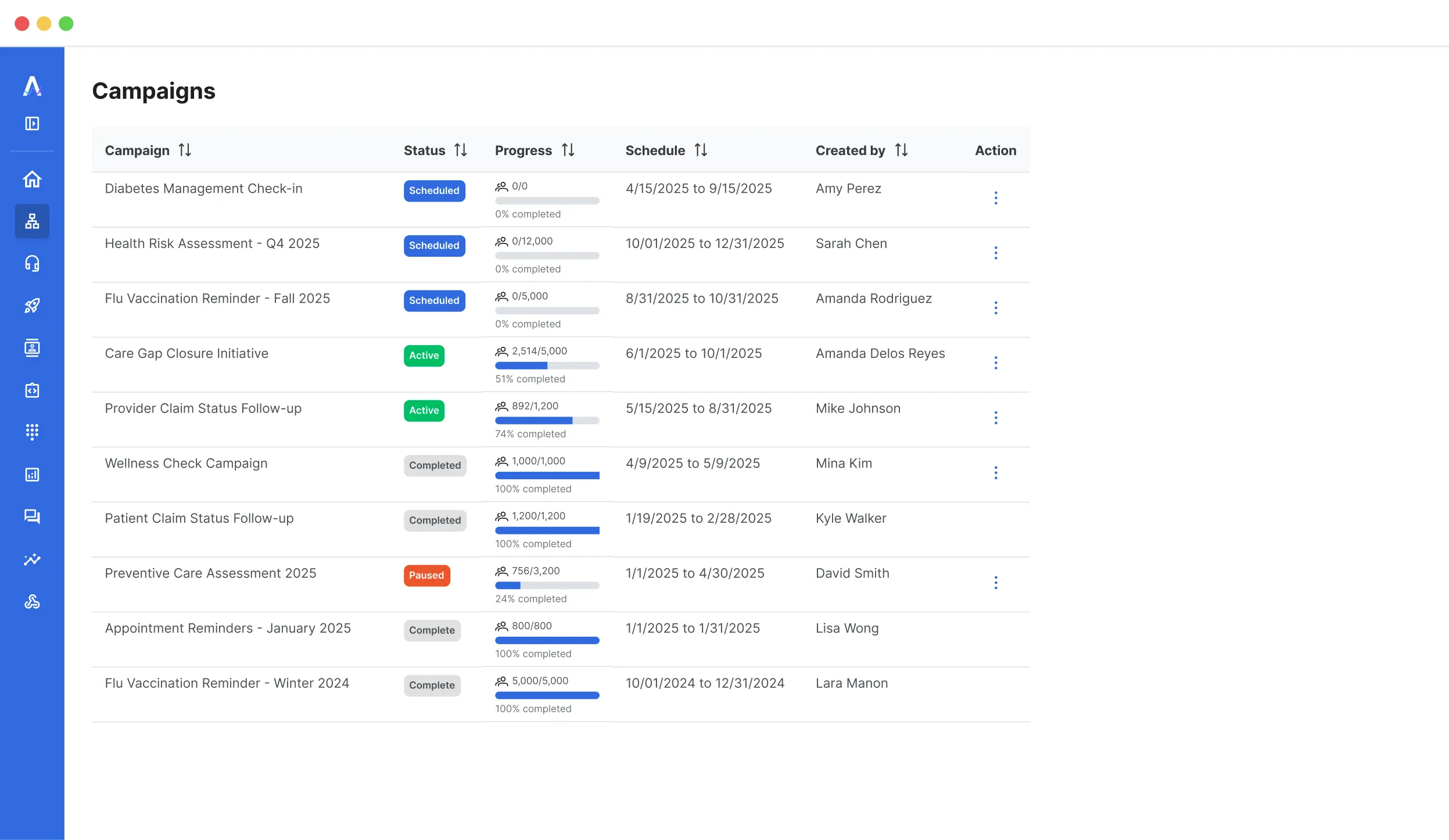
Design intelligent conversations that strengthen human connection
Build automated voice workflows with clear logic, natural communication, and flexible configuration. Create conversations that listen, respond, and guide with the accuracy and care your organization stands for.

Conversations that reflect your care standards
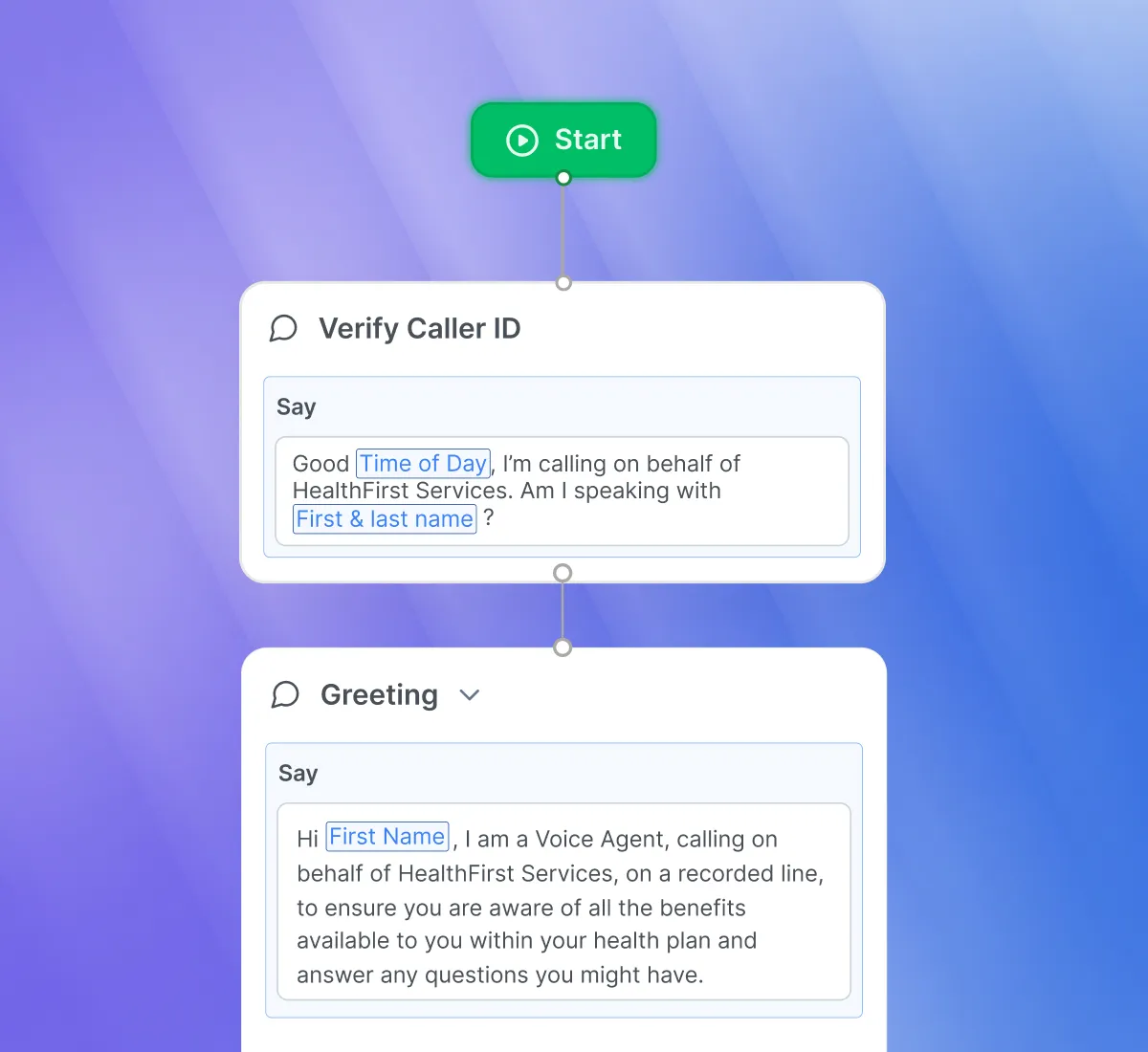
Flow Builder is the workspace where teams design how automated voice interactions unfold. It provides a structured, intuitive way to define instructions, actions, messaging, and branching logic so conversations stay consistent, compliant, and aligned with your operational needs.
Healthcare organizations use Flow Builder to create flows that guide patients and members through scheduling, assessments, referrals, benefit education, and other high volume workflows with both accuracy and empathy.

Why conversational control matters

Consistency at Scale
Set parameters for what the Agentic Voice says and does, ensuring every conversation follows the same high quality, compliant standard.

Deterministic Logic that Builds Trust
Create business logic to inform key decision points so specific inputs always produce the same output. This provides predictable, auditable behavior across populations.

Designed for Healthcare Complexities
Set up flows that respect real world needs including verification steps, required information, routing rules, and escalation paths to human staff when needed.
Tooling to design clear, compliant, and effective voice automation

Conversation design workspace
Define the structure of each conversation including instructions, actions, branching decisions, and where necessary scripted responses. Shape what the agent says and the actions it takes.

Deterministic guidance for critical moments
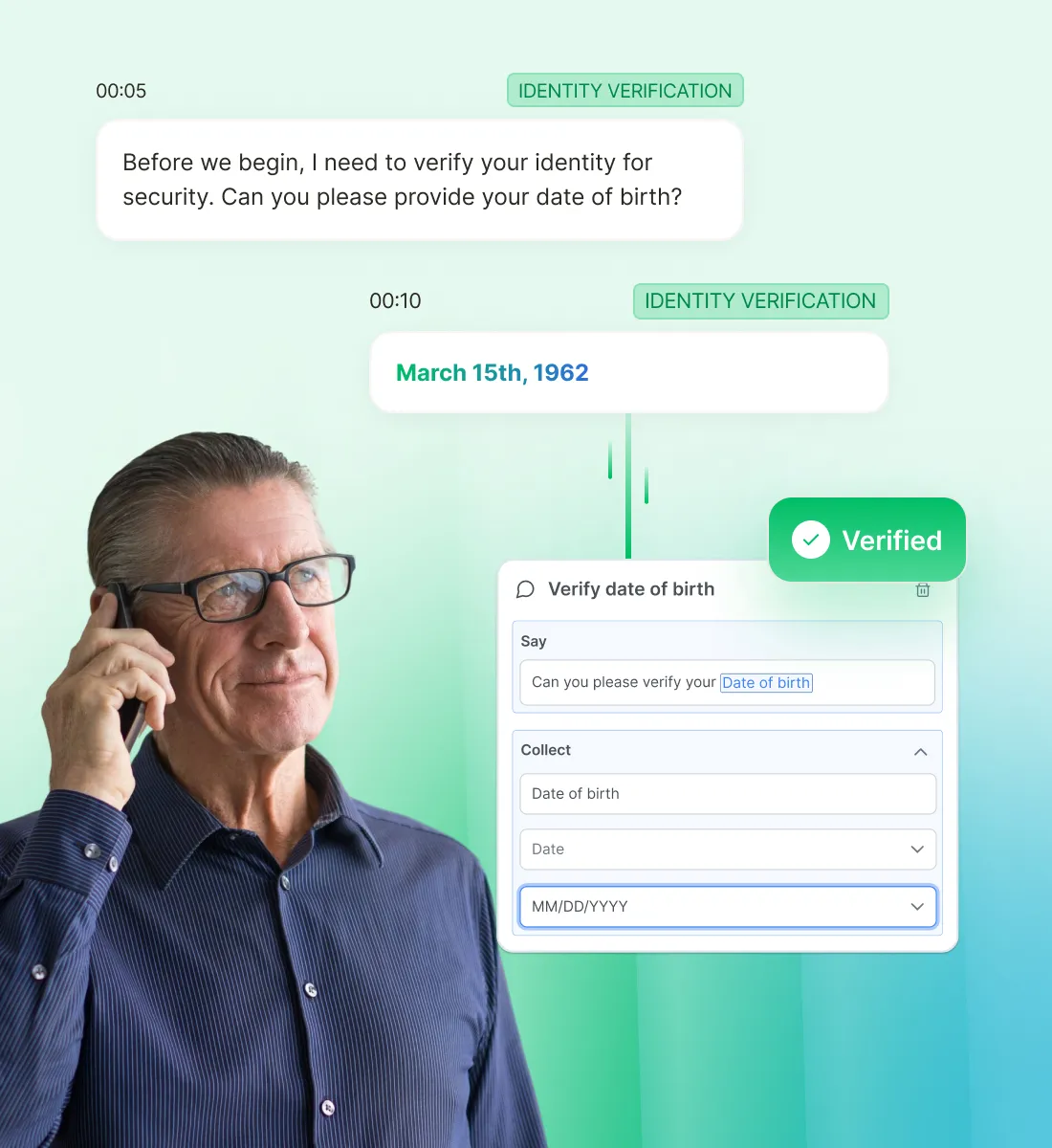
Configure exact rules for essential steps such as identity verification, consent, and required acknowledgments. You can also determine how many times the agent will attempt a required step before taking an alternate route.

Natural handling of interruptions and rephrasing
Configure how the agent responds when callers interrupt, need clarification, or provide unexpected input. These controls support a more natural, human like experience.

Field library for capturing information
Collect and organize information that emerges during the conversation. This data informs how the flow progresses and can be shared with client systems through integrations.

Global and moment-based behavior logic
Apply rules that operate across the entire conversation such as voicemail handling, do not contact logic, or emergency escalation. You can also set rules that trigger at specific steps.

Configurable transfer & escalation logic
Define when and how transfers to human staff occur. Configure the conditions, handoff messaging, and metadata included with the transfer to ensure staff have the context they need to seamlessly continue the care conversation.

Integration steps built into the flow
Define where data should be retrieved or shared including real time updates or post call summaries. This keeps systems aligned and ensures downstream workflows remain accurate.

Workflows designed for healthcare, with self service on the horizon
Today, conversation design is managed by the Attune team, ensuring each workflow reflects the standards and requirements of healthcare communication. As the platform expands, clients will gain access to self service tools supported by ready made templates for common provider and payor workflows. Workflow templates will offer a structured starting point that teams can adapt to their operational needs.
These building blocks will give organizations a clear and efficient way to create consistent, reliable, and patient friendly automated conversations at scale.
For Providers

Monitor scheduling, referral, and care coordination workflows
Understand where patients disengage
Improve efficiency across clinical and administrative communication


For Payors
Track performance of outreach campaigns
Evaluate member engagement patterns
Strengthen quality and operational programs
Frequently asked questions
Who builds and maintains our workflows?
Today, our team designs and builds conversational workflows directly with you and your team as a managed service. You can review the instructions, branching logic, required information and points where a call transfers to staff. Together, we define how the agent handles interruptions, voicemail and unsuccessful attempts to complete a step. Our team manages the conversation design as your requirements develop.
We work collaboratively with you to define what success means for your organization and what different outcomes you'd like visibility into.
How do you set rules, handle exceptions and transfer calls to staff?
The language model handles the conversation, while the deterministic workflow logic controls what happens at each step. We define the information needed at each step and the route to follow when an answer is missing or a check fails. Identity checks can require specific inputs and set an attempt limit. We also define when to transfer a call to staff, where it goes, and what context accompanies it. We operate in a highly regulated space with sensitive data so we make sure to control for the outcome while maintaining conversational nature.
What needs to be checked before a workflow change goes live?
The review needs to cover the intended conversation as well as the points where a caller may interrupt, give an unexpected answer or need help from staff. Our team manages the conversation design in Flow Builder, including required wording, verification steps, retry limits and transfer rules. Automated test scenarios verify the intended change does what it is intended. We also manually simulate engagements to ensure the voice selected is optimized for the use case.
Can a workflow verify a caller’s identity before sharing patient or member information?
Yes, and we treat it as non-negotiable. Patient and member information is protected health data, so identity verification is built into the workflow as a deterministic gate: the agent can’t share protected information or take a restricted action until the required checks pass. The language model doesn’t decide whether someone is verified; the workflow does. We work with you in Flow Builder to define the required inputs, how many attempts are allowed and what happens if a check fails, such as ending the disclosure path or warm-transferring to your team. Consent steps work the same way.
What does deterministic mean for a healthcare voice AI workflow?
It means we build the path a conversation should follow, and it follows that path every time: same intent, same path. The language model interprets what the person says, but it never decides what happens next; the workflow does. For example, the model can identify a date of birth and ZIP code spoken by a caller, and the workflow checks those details against the required values before following the configured match or failed-check route. The result is more reliable outcomes, firmer guardrails and full visibility: every conversation is checkpointed and replayable, so you can trace and audit exactly why the agent did what it did.
Hello. I'm calling on behalf of CareBridge regarding Mary's recent test results. Everything came back normal. If you'd like more information you can call us back at this number. Thanks. Bye Now